We get many questions over the winter about the bees. Questions range from “Do the bees hibernate?” and “What do they eat in the winter?”. The answer can be quite complex and does depend a great deal on what the weather is like where they are kept, even down to the various subspecies of honeybee as each one has different characteristics.
Unfortunately current field trials and scientific evidence suggest that in the uk our native dark/black honeybee (Apis mellifera mellifera for short) that has been here for 4000 years has been erased from the landscape through a mixture of Italian bee imports and cross breeding. The demise was further accelerated by a long and nasty influx of Acarine tracheal mite (Acarapis woodi) between 1916 and 1925. There are a few pockets of Apis mellifera mellifera left in the uk which are very carefully managed in order to ensure the continuation of their characterstics and genetic material so that it may pass down the generations. The traits found in these old black bees that have evolved to acclimatise to our landscape are sometimes missing from modern varieties, and so require a different management strategy. However this all relates back to the original questions we are often posed with. Apis mellifera mellifera were found to have evolved a great tendency towards winter hardiness with a brood cycle to match our climate here in the UK. They had even evolved a slightly hairier body to allow them to forage in adverse weather where other subspecies would not even consider venturing outside the hive.
 Native UK black bees |
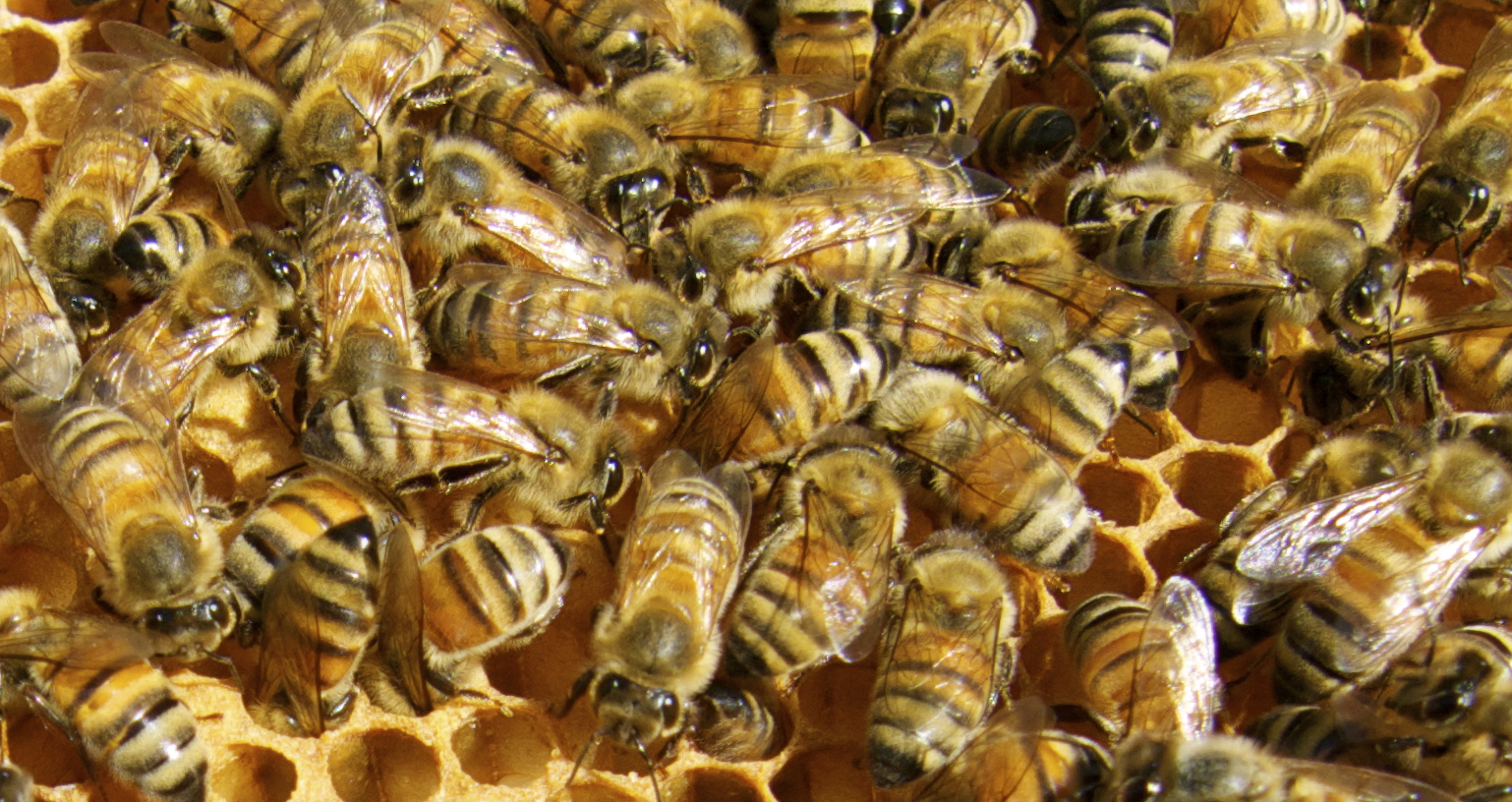 Italian bees |
So…do bees hibernate?
The whole process of bees in the winter starts in late autumn when nectar flow is falling off rapidly and the nights and weather begin to draw in. After the drones have been evicted from the hive, the Queen goes into a state of laying less eggs. The eggs she does lay will create bees which will have a very different set of working criteria when they emerge in 18-22 days time. These winter bees are designed to be a lot hardier and so capable of surviving the long dark days, and colder climate. They will emerge slightly bigger than their summer hatched sisters, with one of the main jobs required to be carried out by them being keeping the hive cluster and the queen warm at all times throughout the day and the night.
During the winter bees don’t necessarily hibernate as such. It has been monitored that bees form into cluster inside the brood nest. They work in synchrony whereby the agitate onboard flight muscles to generate heat thereby warming the hive. These warm bees start at the centre of the cluster and are replaced by bees that are cold on the outer part of the cluster each taking it in turn to warm the colony and taking fair share of the work. During the winter there are many less honey bees in the hive, but each one works tirelessly to keep the colony fit and healthy. Time for sleeping is rare even during what might seem the most inactive times for honeybees in the UK
What do they eat in the winter?
They eat the nectar stored during the spring and summer months and its down to the beekeeper to only take the surplus that is produced, which is exactly what we do at Wildwing. Many beekeepers take off all the crop, and then feed the bees a rendered down sugar solution. They then store this solution after processing it like they would if it were collected from plants (although obviously sugar has a very different chemical make-up to nectar). There is nothing wrong with this in essence, but we prefer to leave them with what they have worked so hard to harvest. When we leave the honey on for winter stores, we do it in the hope that if carefully managed by us it will see them through to the spring. This will then be supplemented with a nectar flow that occurs widely across Essex particularly from things like oil seed rape. This will hopefully ensure a smooth transfer between crops and allow the bees to be in the best position to make the most of the abundance in forage.
Bees often don’t do what the beekeeper thinks they should be doing and therefore these solutions can vary. This is why over years beekeepers develop a knowledge of ‘reading’ the bees every time the hive is opened. Just the hum, or what can be seen going in and out of the hive entrance can be a great instrument in determining what might be going on within.
