In the world of beekeeping there is never a clear cut answer. We are after all dealing with a wild insect. We give them a home and look after them as much as is reasonably possible without intervening too much. One experiment we have been thinking about for a while is adding an extra entrance for the foraging honey bees to enter through. Traditionally bee hives in the UK tend to have a lower entrance for the bees to enter and exit the hive through. There are several theories behind this practice with some suggesting as bees are used to living in tress that a low down singular entrance doesn’t necessarily fit in with their genetical code developed over thousands of years. Western honey bees in wild natural hives according to wikipedia “show several nest-site preferences: the height above ground is usually between 1 metre (3.3 ft) and 5 metres (16 ft), entrance positions tend to face downward”. The average managed colony entrance height is somewhere around the 300mm mark which is quite a difference. So why are our managed colony entrances so low to the ground. Well the obvious factor is for ease of manipulation. If we as beekeepers had to climb up a metre (or even 5 meters) the persuit would be come a lot more hazourdous, especially when it comes to taking off a 10kg super full of capped honey! When we are inspecting our colonies it also helps that the bees are low down coming and going so that they might not notice us opening their home.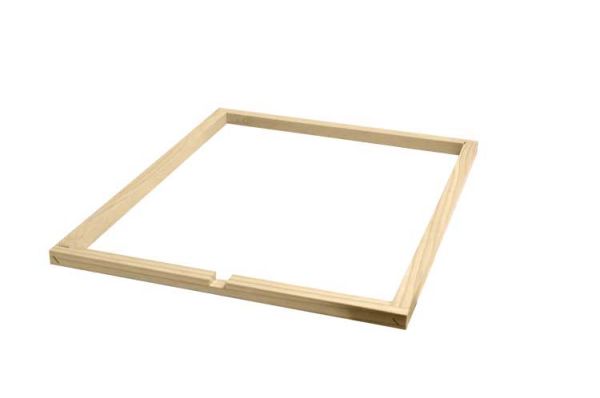 So this summer we have put into practice something we have been thinking of doing for a while. It is often done in the USA, but not widely done here in the UK. We have made ourselves a small pine shim with a small cutout that has been put in between two supers of fully drawn comb to act as second entrance, and one that is over a meter up from the ground. In the USA it was pioneered by a beekeeper called George Imirie, and aptly named the Imirie Shim. It should be placed well above the brood box, ideally above a few supers and you must use a queen excluder. This is one of the main reasons we have started a trial with it as some suggest that a queen excluder is also a ‘honey excluder’ in so much that it takes the bees a lot of effort to move honey from the bottom entrance up through the brood nest, through the queen excluder and then to pass it off to nurse bees for further work on the nectar. Our thinking is life would be simpler for them if the entered straight into the bottom of a super and called pass of the nectar straight away without all that extra six legged work.
